Zero-Emission Vehicle Adoption Scenario Model (TIDE)
State-level dynamic modeling and interactive dashboard to simulate ZEV adoption pathways, infrastructure rollout, and emissions outcomes.
(Aadhithyan, Balaji, Kaniskaa)
2024–Present
( Python, PostGIS, Streamlit, ArcGIS, Matplotlib )
Research Project ( Team of 3 ) - Spatial Analysis | Energy Systems | Planning Framework



Summary
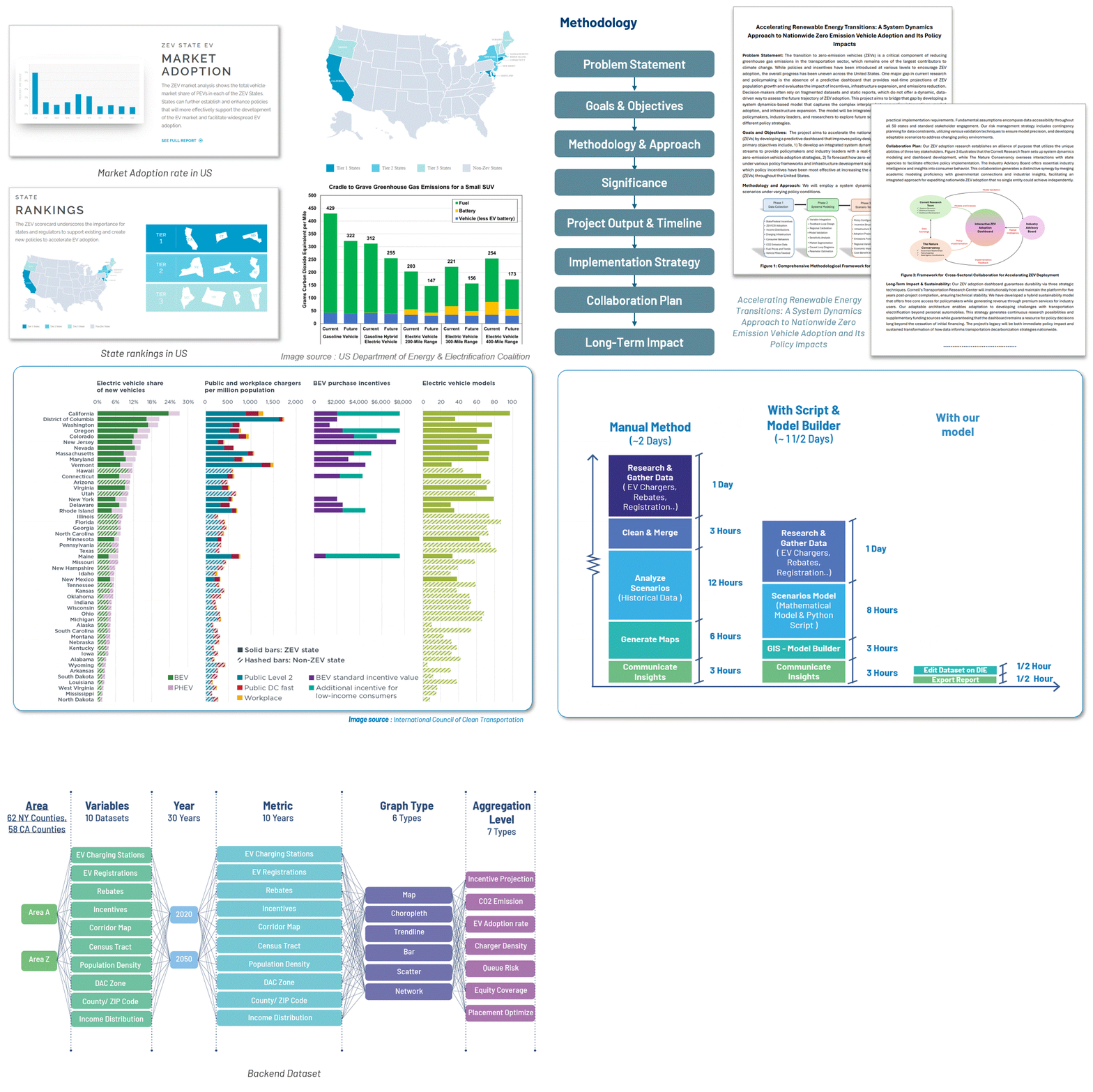
Most transportation decarbonization plans rely on fixed projections or high-level forecasts that do not account for feedback between infrastructure deployment, user adoption, and policy interventions. Without scenario modeling, agencies cannot test how investments in charging infrastructure, incentives, or regional policies affect long-term adoption and emissions outcomes.
Additionally, planners lack tools that integrate infrastructure availability, behavioral adoption rates, and spatial variation into a single decision framework. This limits their ability to evaluate realistic transition timelines and prioritize investments.
Approach
The model uses a system dynamics framework to represent EV adoption as a time-dependent process influenced by infrastructure availability, policy interventions, and behavioral response. Parameters are calibrated using real-world data and optimization routines to align simulations with observed adoption trends. The system allows users to adjust infrastructure rollout rates, incentives, and adoption parameters to observe resulting adoption and emissions trajectories.
Results
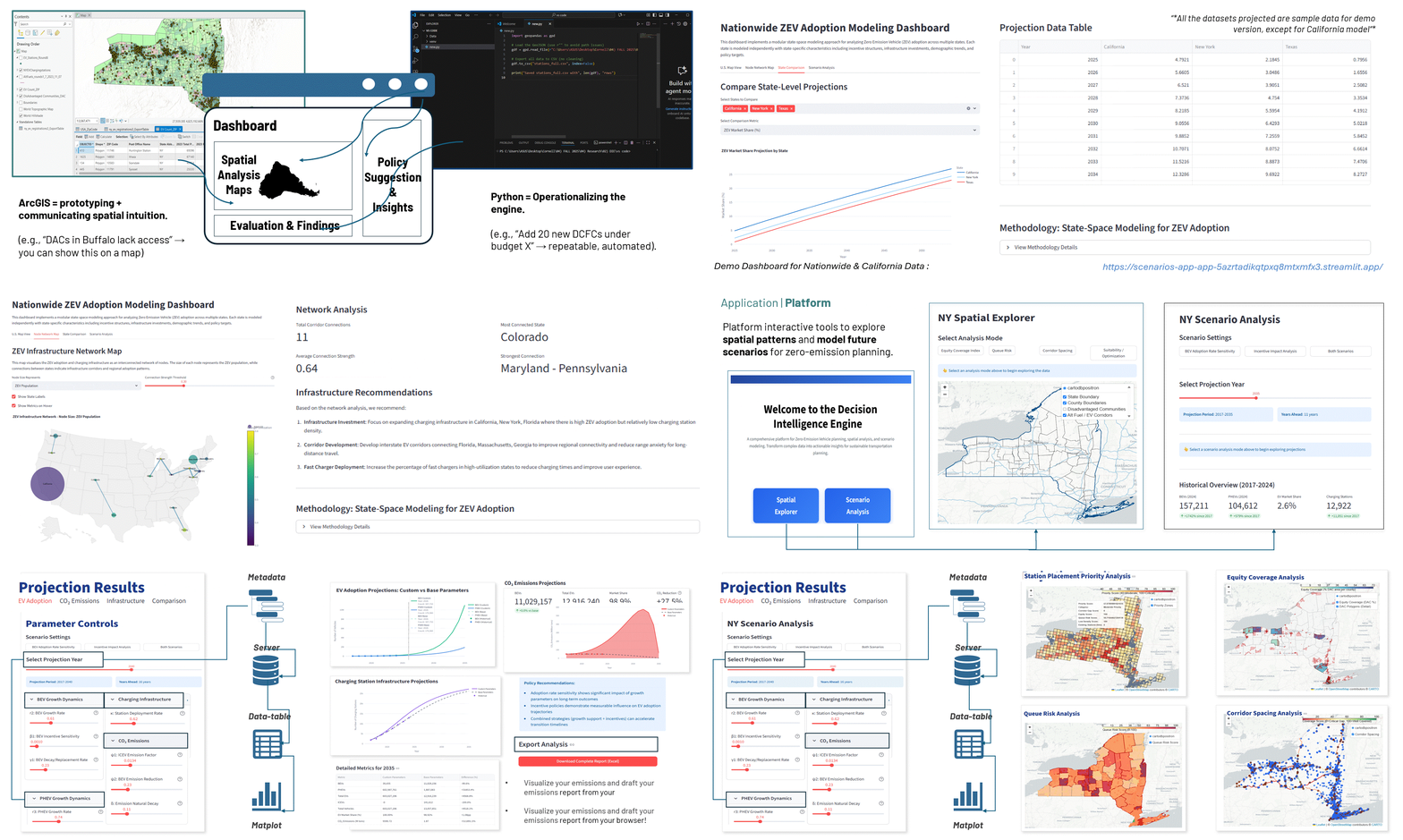
Generated predictive adoption curves, infrastructure demand projections, and emissions outcomes.
The model successfully simulates EV adoption trajectories under multiple deployment scenarios, enabling comparison between aggressive infrastructure rollout, moderate expansion, and baseline conditions. Results demonstrate how infrastructure availability strongly influences adoption acceleration and long-term transition timelines.


Impacts
TIDE provides planners with a dynamic modeling tool to evaluate how infrastructure rollout, policy interventions, and behavioral adoption influence long-term electric vehicle transition outcomes. By enabling real-time scenario testing, the system helps identify strategies that accelerate adoption while minimizing infrastructure risk and inefficient investment.
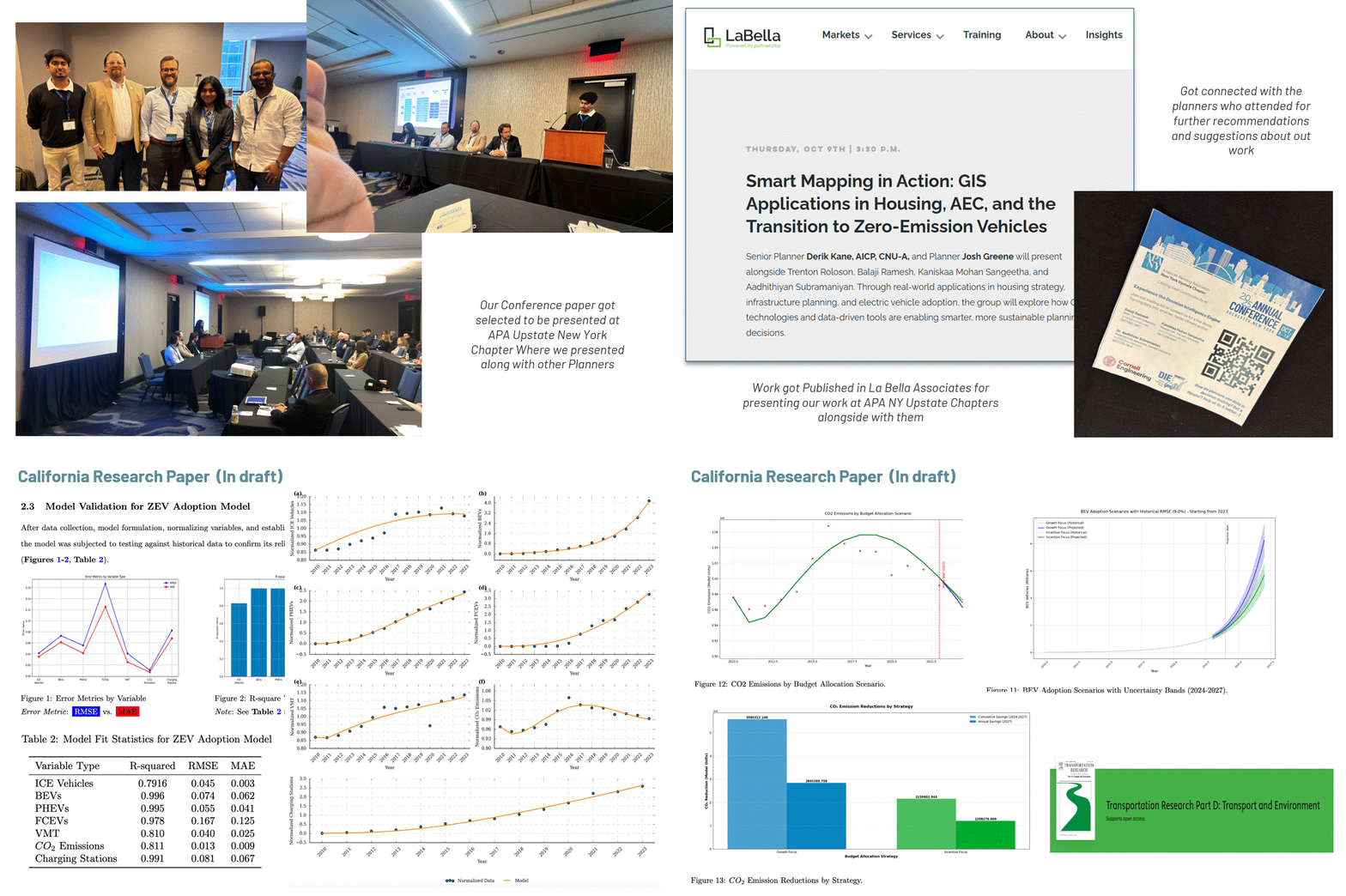
The project was presented at the APA Upstate New York Conference, where transportation planners, regional agencies, and public-sector practitioners engaged with the model’s capabilities.
Want to discuss more about
this project ?