SafeCampus Framework: Participatory Planning Prototype
GIS-based hotspot analysis and prototype concept integrating spatial risk mapping with embedded safety systems for universities.
(Balaji, Kaniskaa)
2025 - 26
( GIS, Spatial Analysis, Machine Learning (Random Forest) Prototype Design, Data Modeling )
Serious Planner


Summary
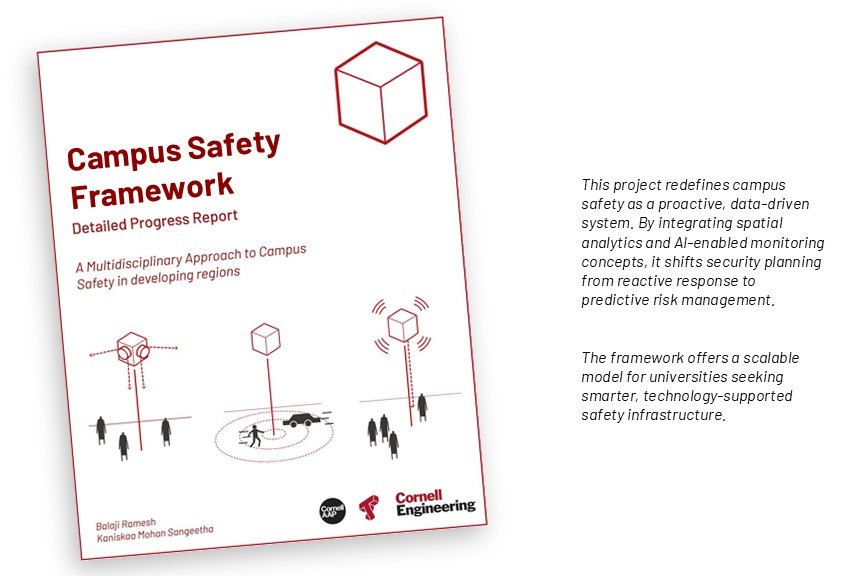
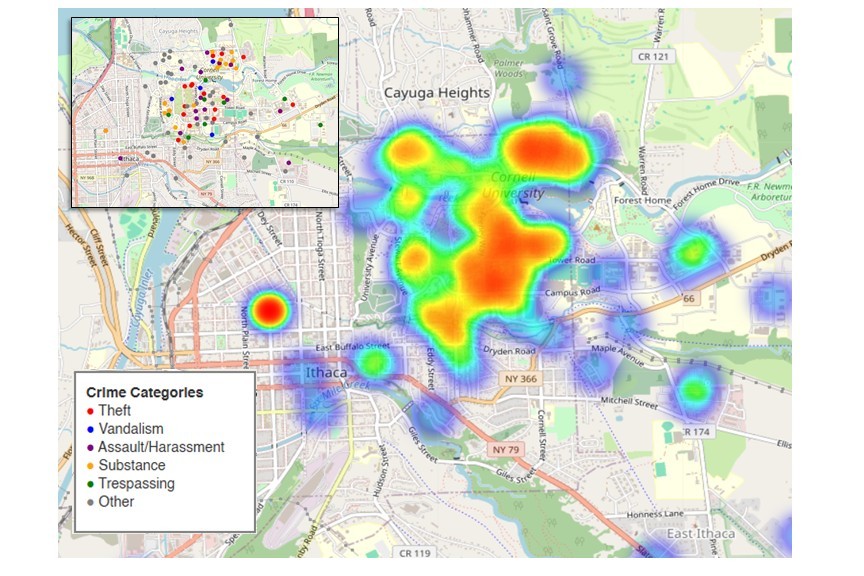
Developed an integrated spatial decision-support and infrastructure framework to analyze campus safety risks and support proactive safety planning. Combined GIS hotspot analysis, machine learning–based incident prediction, and embedded hardware prototyping to identify high-risk zones and design real-time infrastructure interventions for safer campus environments.
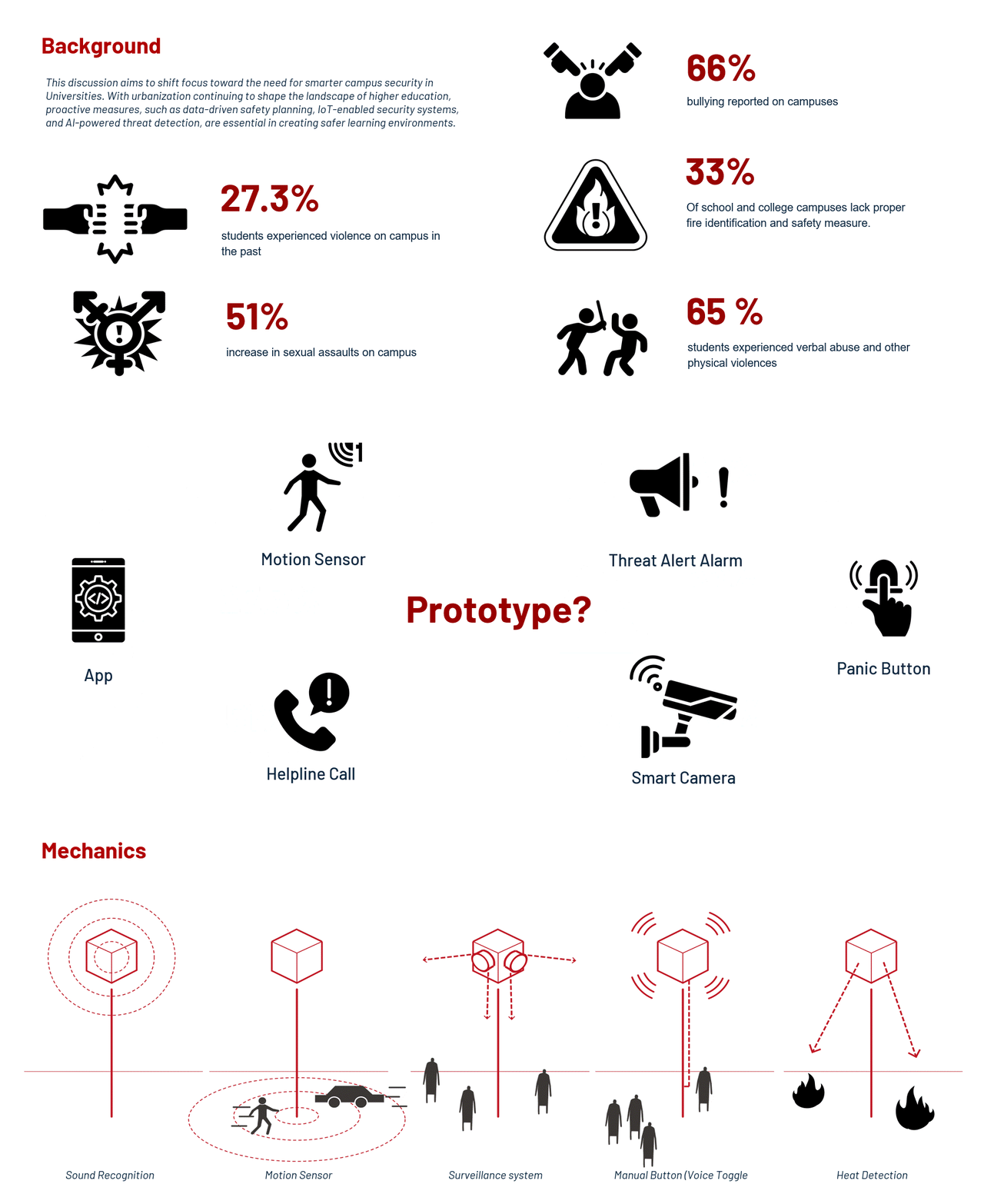
Campus safety planning is largely reactive, relying on historical reporting rather than predictive analysis and infrastructure-informed intervention. This limits the ability of institutions to proactively identify high-risk zones and deploy targeted safety infrastructure.
Approach
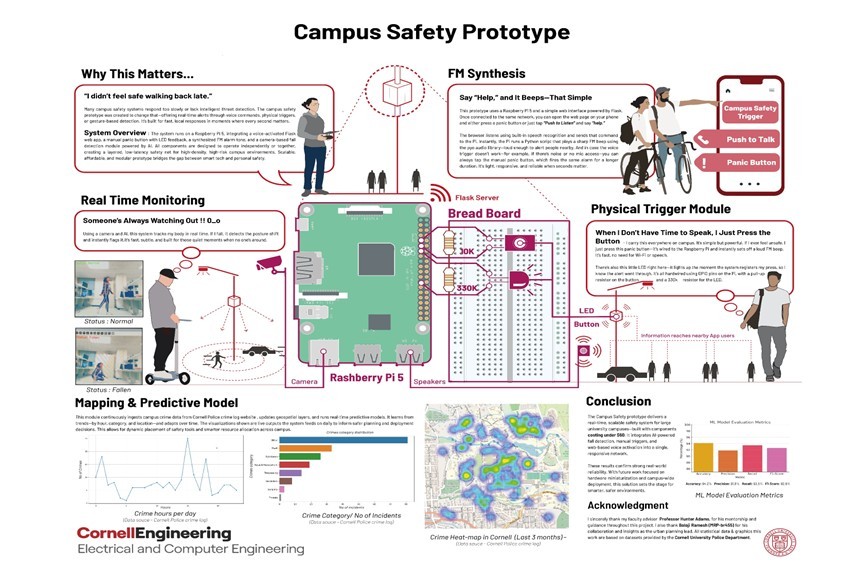
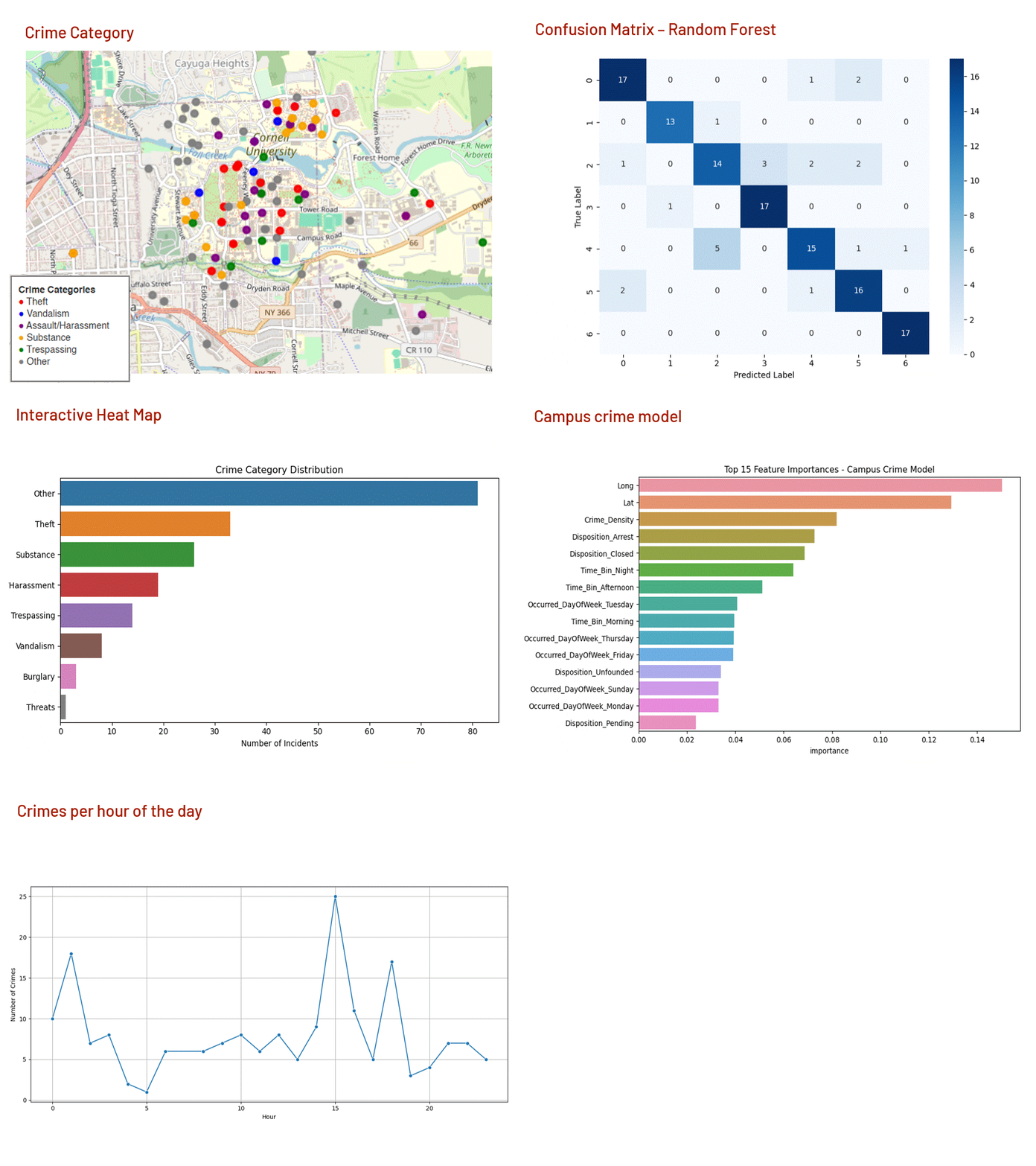
Performed GIS-based spatial analysis of incident data to identify safety hotspots and risk clusters across campus environments. Applied machine learning models to classify and predict incident patterns. Integrated spatial risk mapping with infrastructure proximity analysis, including student housing, transit routes, and activity zones. Designed and prototyped an embedded hardware system using Raspberry Pi to enable real-time emergency alerts and localized safety intervention.
Results
Generated spatial hotspot maps and predictive risk models identifying high-priority intervention zones. Developed a safety risk classification framework integrating spatial and behavioral patterns. Built a functional hardware prototype capable of real-time threat detection and emergency alert triggering. Created an integrated spatial and technological framework linking predictive analytics with infrastructure-based safety intervention.

Impacts
This project demonstrates how spatial analytics, predictive modeling, and embedded infrastructure systems can transform campus safety from reactive response to proactive risk mitigation.
The framework enables institutions to prioritize infrastructure investment, optimize safety resource deployment, and improve real-time response capabilities. Its scalable architecture supports broader applications in urban safety planning, smart infrastructure systems, and data-driven public safety decision-making.
Want to discuss more about
this project ?